
Skip to content
CBT Nuggets
DemoBook a Demo
MicrosoftProfessional

Microsoft Certified: Security, Compliance, and Identity Fundamentals (SC-900)

Standardize your team on Microsoft Certified: Security, Compliance, and Identity Fundamentals (SC-900) with a structured Microsoft training path — virtual labs, a blueprint-weighted practice exam, and team admin reporting included on every CBT Nuggets training subscription.

1
Course
$99
Exam cost
1
Practice exam
5
Core skills
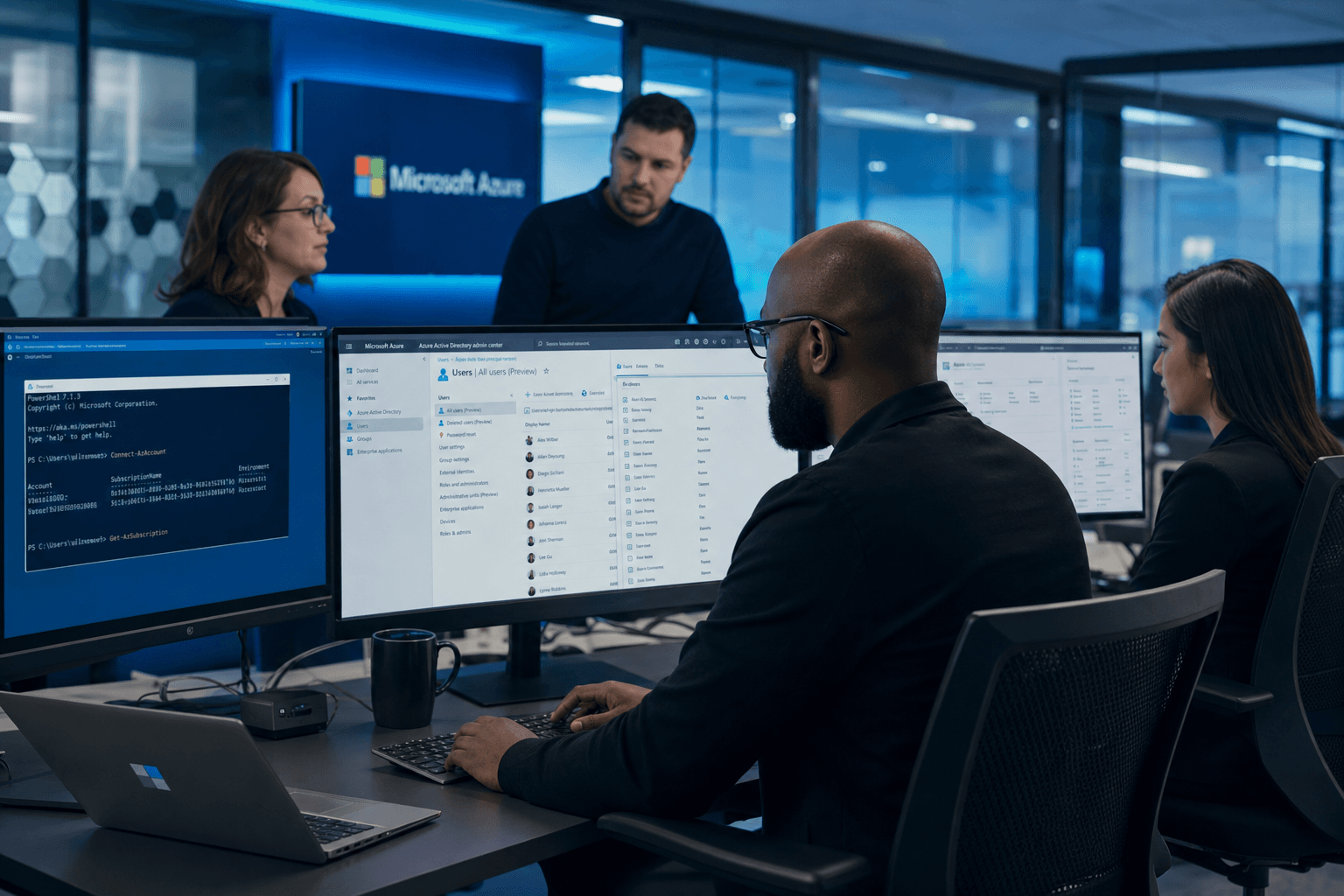
Microsoft Azure / 365 admin team at workstations with PowerShell and identity consoles
Difficulty
Difficulty: 1 of 5 (Easy)
Easy
Exam cost
$99
Courses on path
1
Official source
Exam code
  • SC-900

Exam datasheet

Exam length
45 minutes
Questions
40-60
Passing score
700/1000
Prerequisites
None
Recommended experience
Basic understanding of security, compliance, and identity concepts
Recertification
1 year
Hiring-market salary
$110,000 - $140,000 per year
Certified professionals
10,000+

Public hiring-market data — not a CBT Nuggets guarantee.

Skills your team builds

Security FundamentalsCompliance and GovernanceIdentity and Access ManagementMicrosoft Azure SecurityMicrosoft 365 Security

Every certification includes

Expert-led video training
Virtual labs
Certification practice exams
Per-team completion reporting
Customer outcome

Make SC-900 a coverage number your auditor can quote

Microsoft Certified: Security, Compliance, and Identity Fundamentals (SC-900) certified engineers are easy to count and easy to prove. CBT Nuggets bundles the prep into a single team playlist so leadership sees who's on the path, who finished, and who's exam-ready — without spreadsheets.

1 path
from foundation to credential — assigned and tracked as one playlist

Coverage proof

Make SC-900 a number on your team capability sheet, not a single engineer’s certificate.

Standardizing your team on SC-900 gives leadership and auditors a coverage number they can quote — and gives Microsoft incident response a baseline of capability you can predict instead of hoping for.

Credential: Microsoft Certified: Security, Compliance, and Identity Fundamentals (SC-900)

Exam
  • SC-900

Frequently asked questions about Microsoft Certified: Security, Compliance, and Identity Fundamentals (SC-900) training

Common questions IT directors ask when evaluating Microsoft Certified: Security, Compliance, and Identity Fundamentals (SC-900) training for their team.

How does Microsoft Certified: Security, Compliance, and Identity Fundamentals (SC-900) fit into our internal compliance and governance program?

Team reporting in CBT Nuggets documents assigned training, completion, and certification coverage for internal governance or external audit conversations. Pair the Microsoft Certified: Security, Compliance, and Identity Fundamentals (SC-900) path with your auditor's control crosswalk for the formal compliance mapping your specific framework requires.

What's the ROI of certifying our team on Microsoft Certified: Security, Compliance, and Identity Fundamentals (SC-900)?

IT Directors typically frame Microsoft Certified: Security, Compliance, and Identity Fundamentals (SC-900) ROI in operational terms — faster troubleshooting, defensible role coverage, predictable onboarding velocity, and audit-ready training documentation. The metrics that matter aren't seat-time or completion percentages; they're mean time to resolve, time-to-productivity for new Microsoft hires, and certification coverage by role.

How does CBT Nuggets Microsoft Certified: Security, Compliance, and Identity Fundamentals (SC-900) training compare to Pluralsight, LinkedIn Learning, or Udemy Business?

CBT Nuggets Microsoft Certified: Security, Compliance, and Identity Fundamentals (SC-900) courses are built by named expert trainers (not crowd-sourced contributors), include hands-on virtual labs in many courses, and include certification practice exams mapped to the vendor's published exam objectives. Team admin reporting tracks assignment, completion, and exam-readiness per engineer — the surface managers actually use to manage team training programs. See /compare for the full feature comparison.

How do I assign and track Microsoft Certified: Security, Compliance, and Identity Fundamentals (SC-900) training for my team?

From the admin console, managers create a training playlist (one or more courses on the Microsoft Certified: Security, Compliance, and Identity Fundamentals (SC-900) path), assign it to specific engineers or role groups, and track completion + practice-exam scores per learner. Team-wide reporting rolls up to a single dashboard you can export for monthly leadership reviews or quarterly compliance reporting. No spreadsheet, no per-engineer license fiddling.

How long does it take to certify a team on Microsoft Certified: Security, Compliance, and Identity Fundamentals (SC-900)?

Depends on the cert and the team's starting baseline. Entry-level Microsoft certs typically run 4–6 weeks per engineer from a cold start; associate-level certs run 8–12 weeks; professional/expert tracks can run 3–6 months. Most teams budget the full quarter for any associate-level certification so engineers have time to actually apply the lab work before the exam.

What if Microsoft updates the Microsoft Certified: Security, Compliance, and Identity Fundamentals (SC-900) exam objectives?

CBT Nuggets updates Microsoft course content as exam objectives refresh — typically within weeks of the vendor's release. When Microsoft restructures or renames a track (a common pattern), the assigned training paths stay aligned with the same team training plan; managers don't have to rebuild the playlist from scratch. The training stays current without anyone losing their certification status mid-stream.

Ready to Microsoft Certified: Security, Compliance, and Identity Fundamentals (SC-900)-certify your team?

Build Microsoft Certified: Security, Compliance, and Identity Fundamentals (SC-900) capability across your team

See how CBT Nuggets helps IT Directors plan and track Microsoft Certified: Security, Compliance, and Identity Fundamentals (SC-900) training across the team — labs, practice exams, and reporting included.